
Texas Background Check Records
Texas background check records pull from several state and county systems. The Texas Department of Public Safety (DPS) runs the main criminal history database for the state, collecting data from law enforcement agencies across all 254 counties. You can search conviction records by name through the DPS public site, look up sex offenders through the statewide registry, search court cases through re:SearchTX, or request records from county offices under the Texas Public Information Act. This page covers the main sources for Texas background check records, what each one holds, and how to use them.
Texas Background Check Overview
What Texas Background Checks Include
A Texas background check can draw on several different record systems. The Texas DPS Computerized Criminal History (CCH) system is the primary state database. It holds Class B misdemeanor convictions and higher, deferred adjudication cases, and arrest records tied to those offenses. Dismissed cases and Class C misdemeanors do not appear in the state CCH. The DPS pulls this data from arresting agencies, county attorneys, and courts across Texas, all of which are required by law to report criminal history information to the department. The CCH is updated regularly as courts and law enforcement agencies submit new dispositions and arrest data. Texas Government Code Section 411.082 defines how the criminal history records subchapter applies and who is subject to its provisions.
Sex offender records, court case data, inmate files, and county clerk records each hold information that may factor into a background check. These sources are maintained separately by different agencies, but they work together to form a more complete picture of a person's public record history in Texas.
The Texas DPS Crime Records Division coordinates eight state and national criminal justice programs and serves as the State Control Terminal for the FBI's CJIS network. Data submitted by local agencies flows into statewide databases and is then forwarded to federal databases at the national level. The division also provides around-the-clock access to mission-critical systems for law enforcement and criminal justice agencies in Texas and across the country.
The Texas DPS criminal history records page explains what the Computerized Criminal History system includes and how agencies submit data to it.
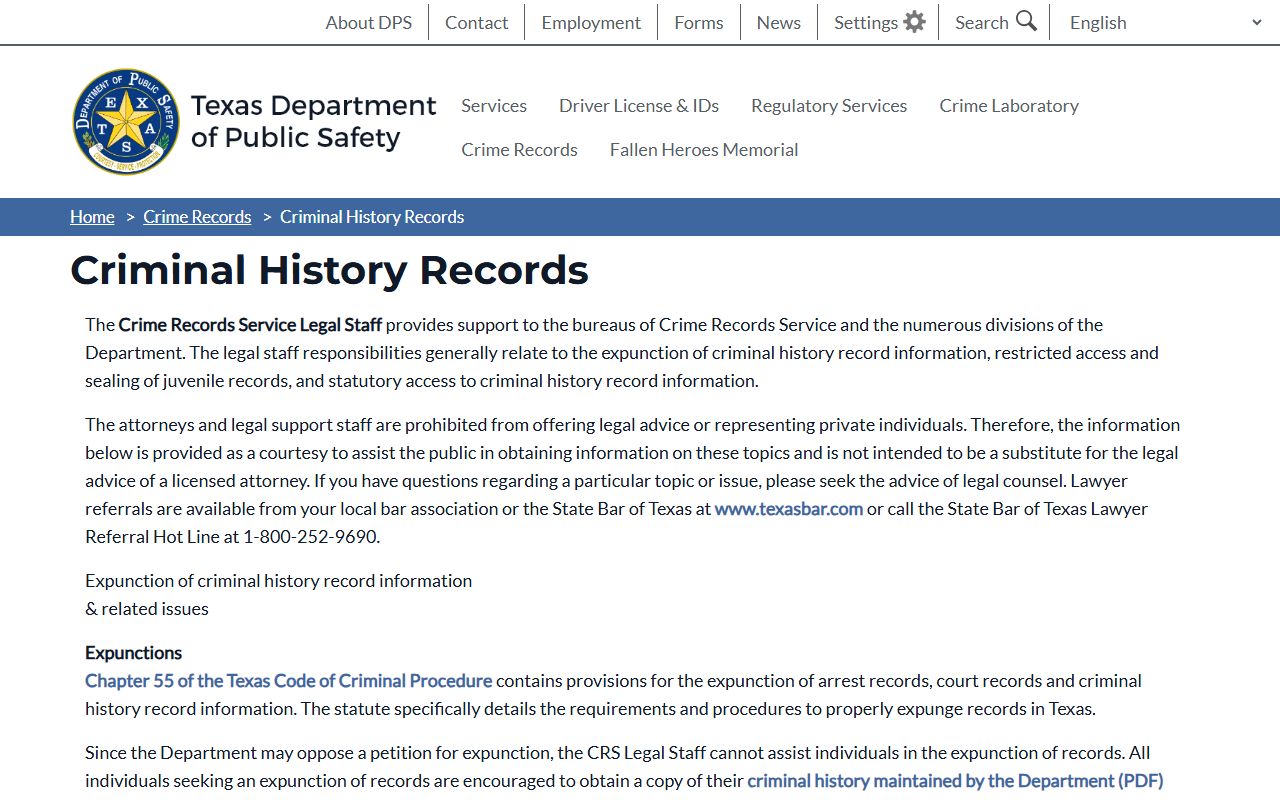
The CCH is the central repository for all conviction and deferred adjudication data reported by Texas courts and law enforcement agencies statewide.
Texas DPS Criminal History Name Search
The DPS runs a public-access conviction database that anyone can search. Go to records.txdps.state.tx.us and create a free account. After that, you buy credits before running searches. Each name search costs $3, plus a small processing fee depending on how you pay. You need to enter a first name, last name, and date of birth. Results show arrest details, case dispositions, and prosecution information for convictions and deferred adjudication cases. Dismissed cases do not appear. Under Texas Government Code Section 411.135, the public has the right to access conviction information maintained by the DPS.
The system shows results that match the name and date of birth you entered. What shows up includes:
- Arrest details tied to convictions
- Case dispositions (conviction or deferred adjudication)
- Prosecution information
- Offense type and level
- County where the case was filed
- Court information and case number
Name-based searches are not exact. The DPS is clear about this. A search by name and date of birth may return results that do not belong to the person you are looking for. The only way to confirm a match is through fingerprints. You cannot assume a name-search result belongs to the person you searched. Records only cover Texas convictions. Offenses from other states do not appear in the state CCH. Call (512) 424-2474 to reach the DPS criminal history records division. The DPS Crime Records Service page has current information on the system and what it covers.
The DPS publishes answers to common questions at the Criminal History Records FAQ page, which covers fees, search limits, and what records appear in the database.
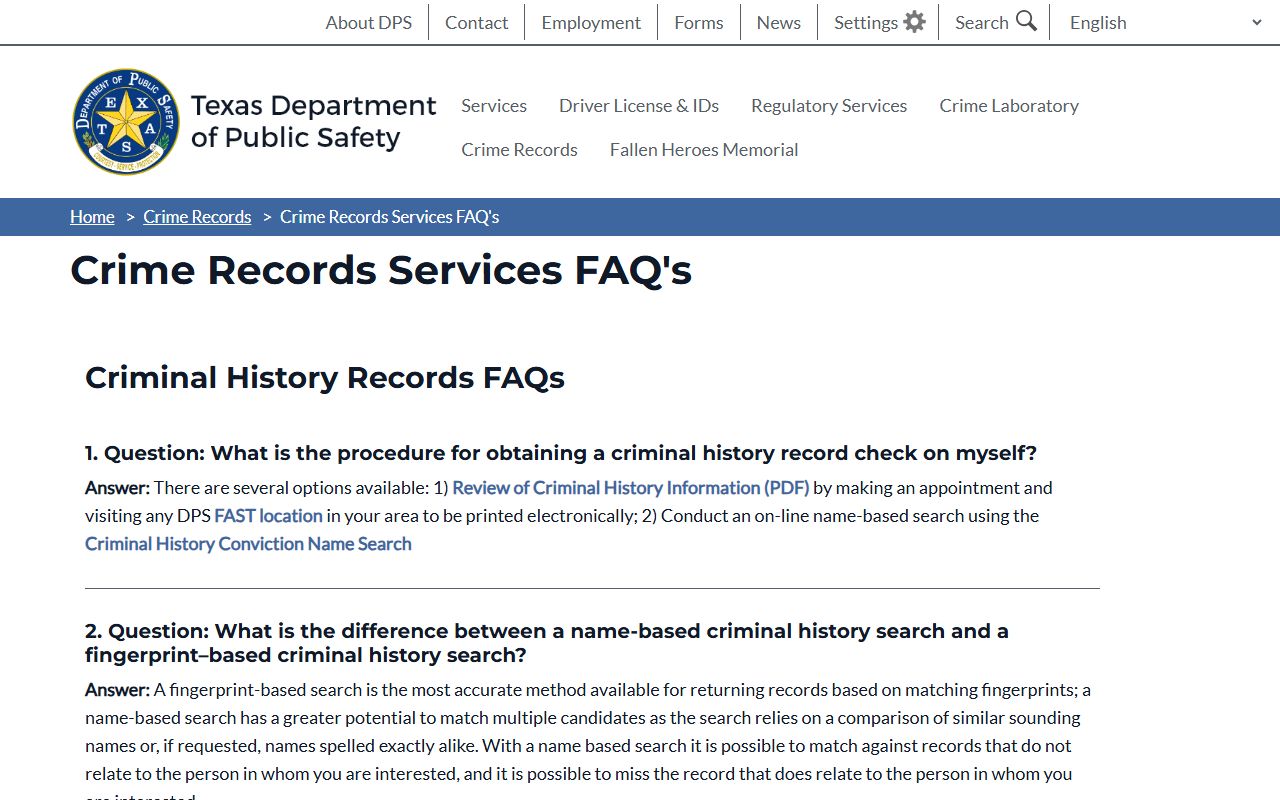
The FAQ covers the difference between name-based and fingerprint-based searches, how to dispute incorrect information, and how agencies report data to the DPS.
Note: Name-based criminal history searches in Texas are not exact. Only fingerprint-based searches positively link an individual to a specific criminal history record in the CCH system.
Texas Fingerprint-Based Background Checks
Fingerprint-based checks are more accurate than name searches and are required for certain official purposes in Texas. The DPS runs these through the Fingerprint Applicant Services of Texas (FAST) program. You schedule an appointment through the Texas Fingerprint-based Applicant Clearinghouse of Texas (FACT) system, then visit an approved fingerprint collection site. The DPS partners with IdentoGO, formerly MorphoTrust USA, for fingerprint collection across the state. You can reach IdentoGO at 1-888-467-2080 to find a nearby location. Visit the FAST program page for full details. The fingerprint scan fee is $10. The criminal history record information (CHRI) costs an additional $15. Most results come back within 24 to 72 hours after the appointment. You can also request a personal review of your own CHRI through the FAST process by providing a designated recipient for your results at the time of your appointment.
Organizations that need ongoing access to fingerprint-based results use the FACT Clearinghouse. This is a secure DPS repository that stores fingerprint-based criminal history records for authorized agencies. Texas Education Code Sections 22.0832 through 22.085 require certain organizations to run fingerprint-based checks on staff and volunteers. To set up a FACT account, contact FACT@dps.texas.gov or call (512) 424-2365, Option 2. The account setup requires your organization's name, address, phone, and designated point of contact.
The FACT Clearinghouse portal gives authorized organizations secure access to fingerprint-based criminal history results stored by the DPS.
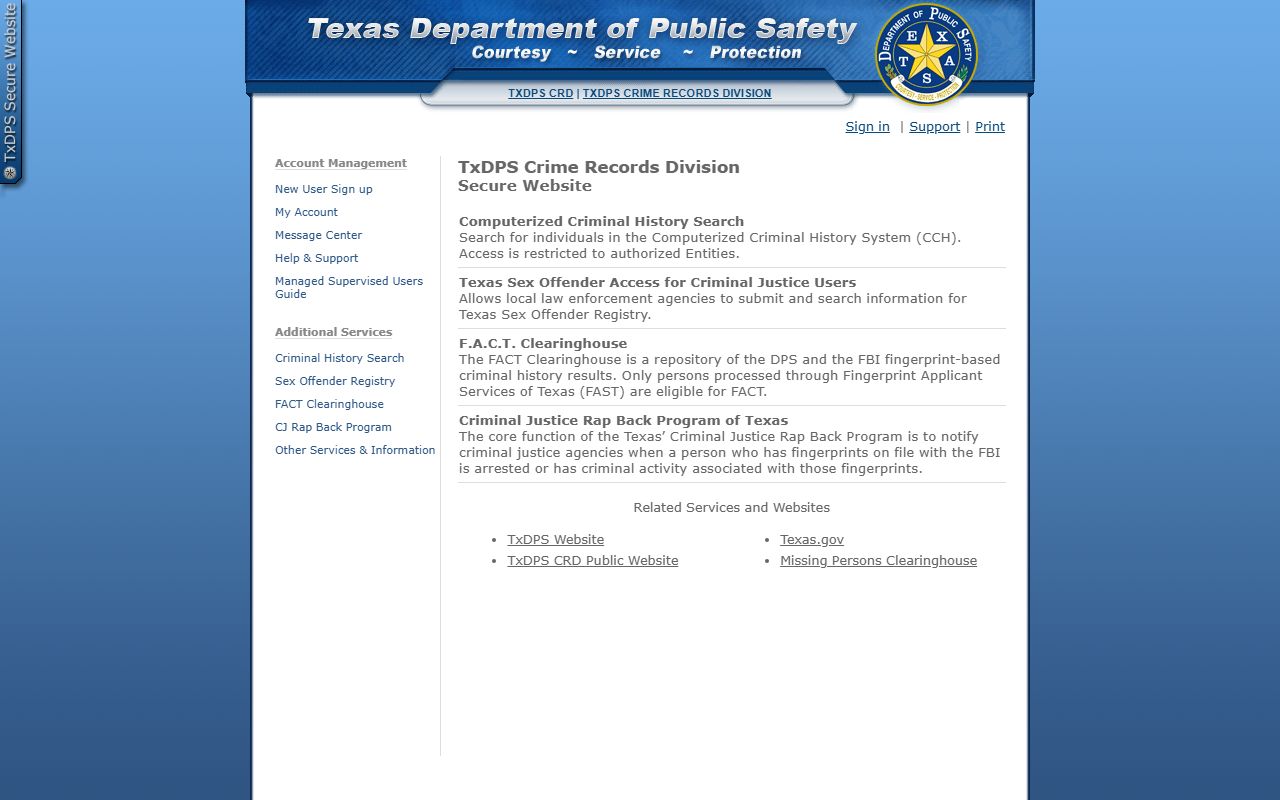
Access to the FACT system is restricted to authorized accounts. Organizations must comply with DPS security requirements and designate supervisors to control access to the criminal history data.
Texas Sex Offender Registry
Texas maintains a free public sex offender registry at records.txdps.state.tx.us/SexOffender. The DPS runs this registry under Texas Code of Criminal Procedure Article 62.005, which requires the department to establish a public internet database for sex offender registration information. You can search by name, by SID number, or by location using an address or map tool. Each record shows a photo, physical description, current registration address, and offense details. The DPS pulls data from the Texas Department of Criminal Justice, the Texas Youth Commission, and local criminal justice agencies statewide. Not every registrant appears on the public site. Courts can order removal from the public database under Article 62.301 for qualifying cases. Using registry information to harass or harm someone is a criminal offense under Texas law.
Some information is protected by law and does not appear online. Home phone numbers, Social Security numbers, and driver license numbers stay off the public registry. The Texas Legislature mandates these exclusions, and the DPS cannot release them regardless of the request type.
The DPS Sex Offender Registration Program page covers the rules, requirements, and scope of Texas's statewide registry system.
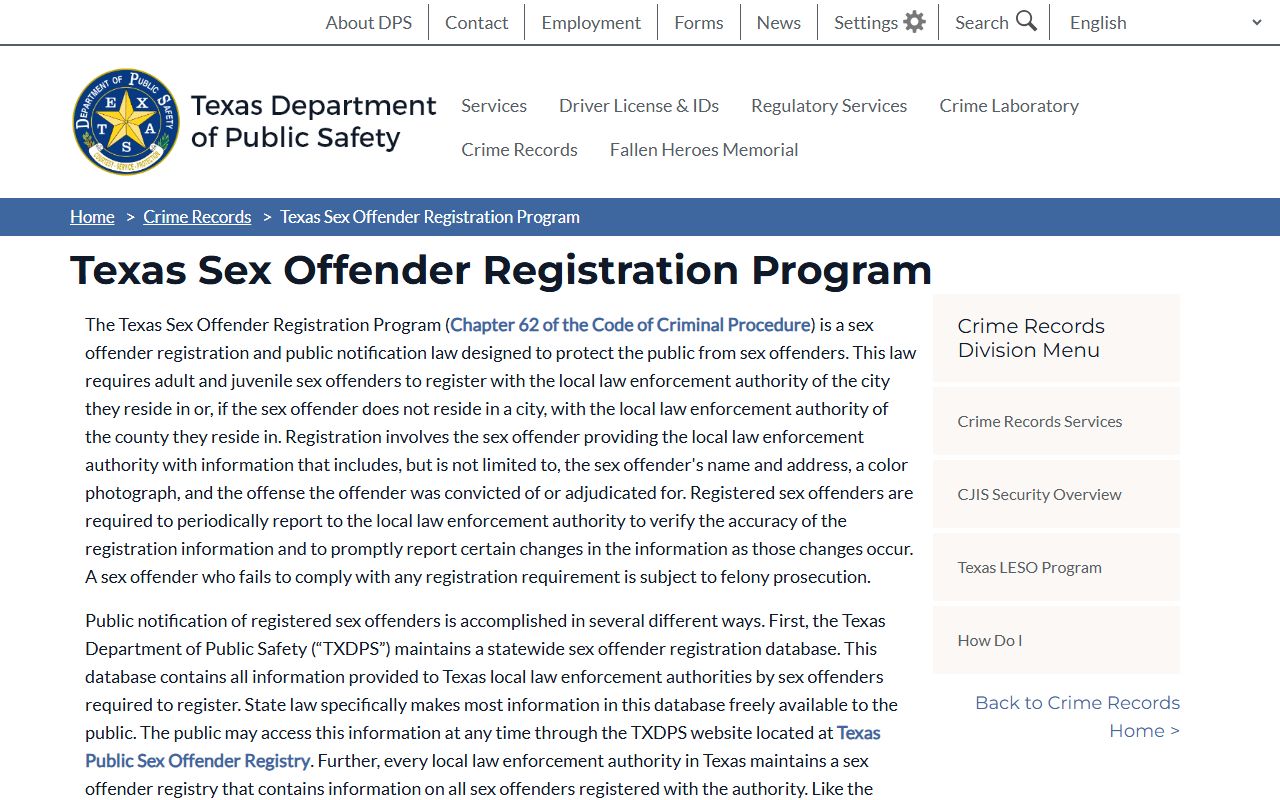
The program page explains who must register, how long registration lasts, and what information is available to the public under state law.
Texas Court Records and Background Check Data
The re:SearchTX portal gives free public access to court case information from all 254 Texas counties. It covers e-filed cases from 2016 to the present. You can search by party name, cause number, or case type. Results show party names, case status, upcoming hearings, and docket entries. The system is free. Some older cases and certain courts may not yet be in re:SearchTX. Large counties like Harris, Dallas, and Tarrant also run their own public case search tools. For cases older than 2016 or from courts not yet in the portal, contact the county clerk or district clerk directly in the county where the case was filed.
County clerks keep misdemeanor criminal cases, civil cases under $250,000, and probate records. District clerks hold felony criminal cases, civil matters over $250,000, and family law filings. Knowing which office to contact saves time when searching for a specific type of background check record. Some counties use third-party platforms like i-Docket or Tyler Technologies to provide public online access to case indexes. These are official systems authorized and used by county governments. Search results from these systems show party names, case numbers, filing dates, and case dispositions. For certified copies of actual court documents, you contact the clerk's office directly, either in person or by mail.
The re:SearchTX portal is the official statewide court case search system, covering e-filed cases from all 254 Texas counties back to 2016.
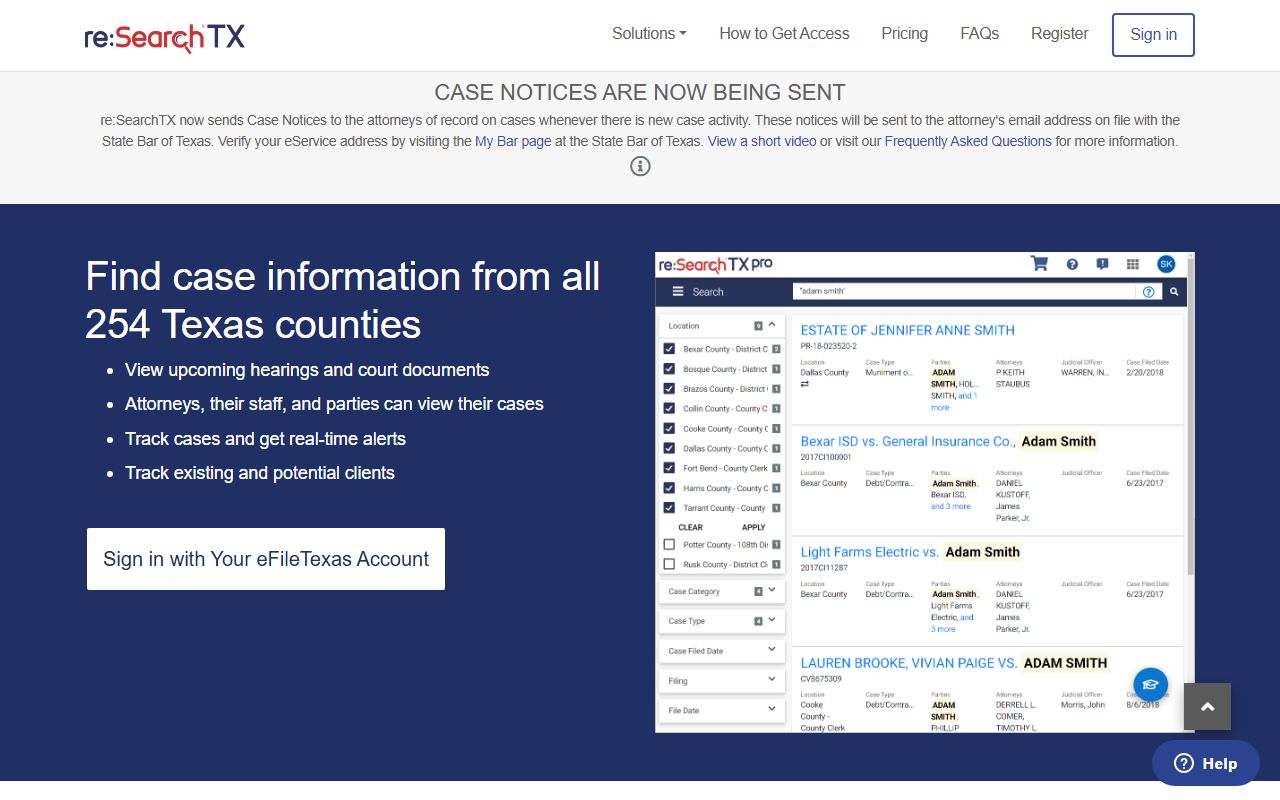
Attorneys, parties, and the general public can search cases, view hearing schedules, and track case activity at no cost through the re:SearchTX portal.
The DSHS Vital Statistics section maintains the state's central registry of birth, death, marriage, and divorce records going back to 1903.
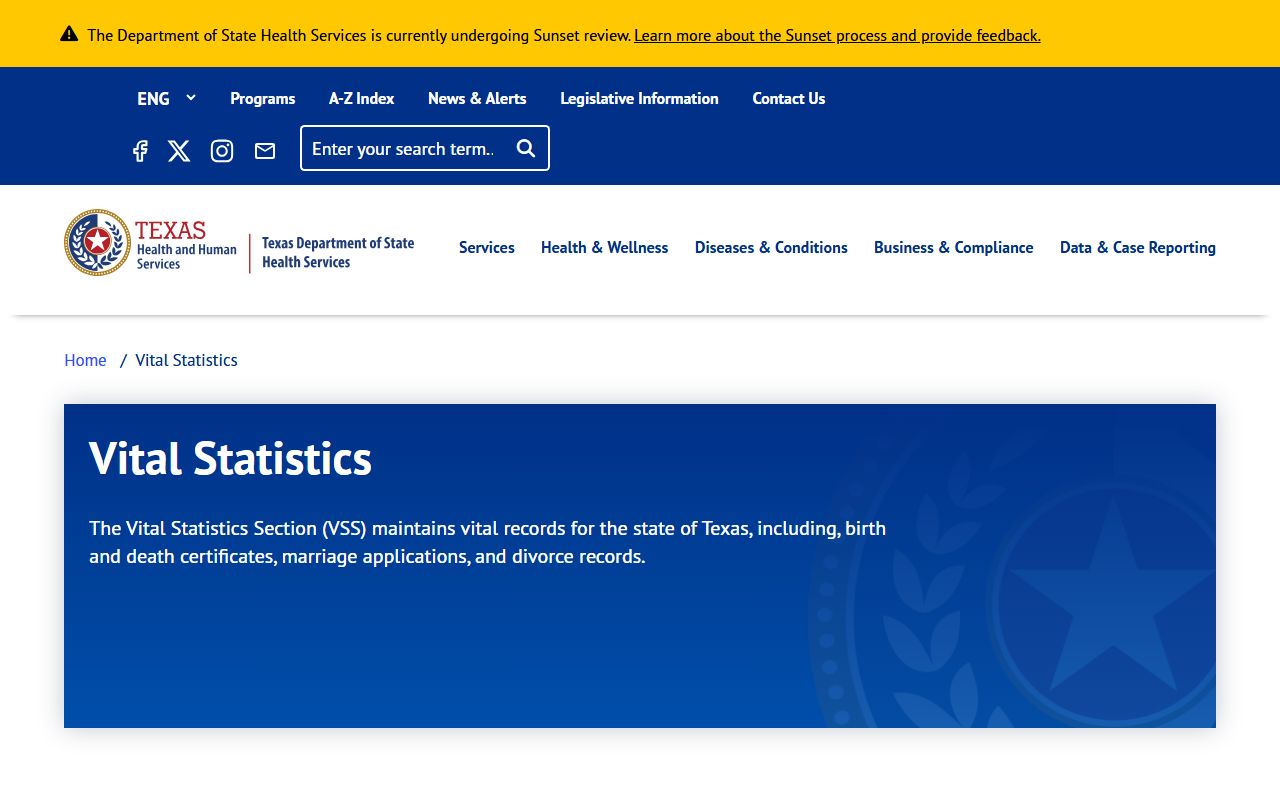
Certified copies from DSHS cost between $20 and $23 depending on the record type and can be ordered online, by mail, or in person at the Austin office.
Note: The re:SearchTX system covers e-filed cases from 2016 forward. For older records, contact the county clerk or district clerk in the county where the case was filed.
Texas Inmate and Corrections Records
The Texas Department of Criminal Justice (TDCJ) manages the state prison system and keeps records on current and former inmates. Their offender search at tdcj.texas.gov lets you look up anyone committed to the state corrections system by name or TDCJ number. Results show the offense, sentence details, and projected release date. TDCJ covers people sentenced to state prison. County jail records are held separately by the Sheriff's Office in each county. Many county sheriffs post an online inmate roster updated daily or weekly. Call the TDCJ Austin office at (512) 463-9988 with questions about state inmate records or searches.
County jail records and state prison records are different. Always check the right source based on the type of case involved.
The Texas Department of Criminal Justice website has the offender search tool and information about the state prison system, parole, and correctional programs.
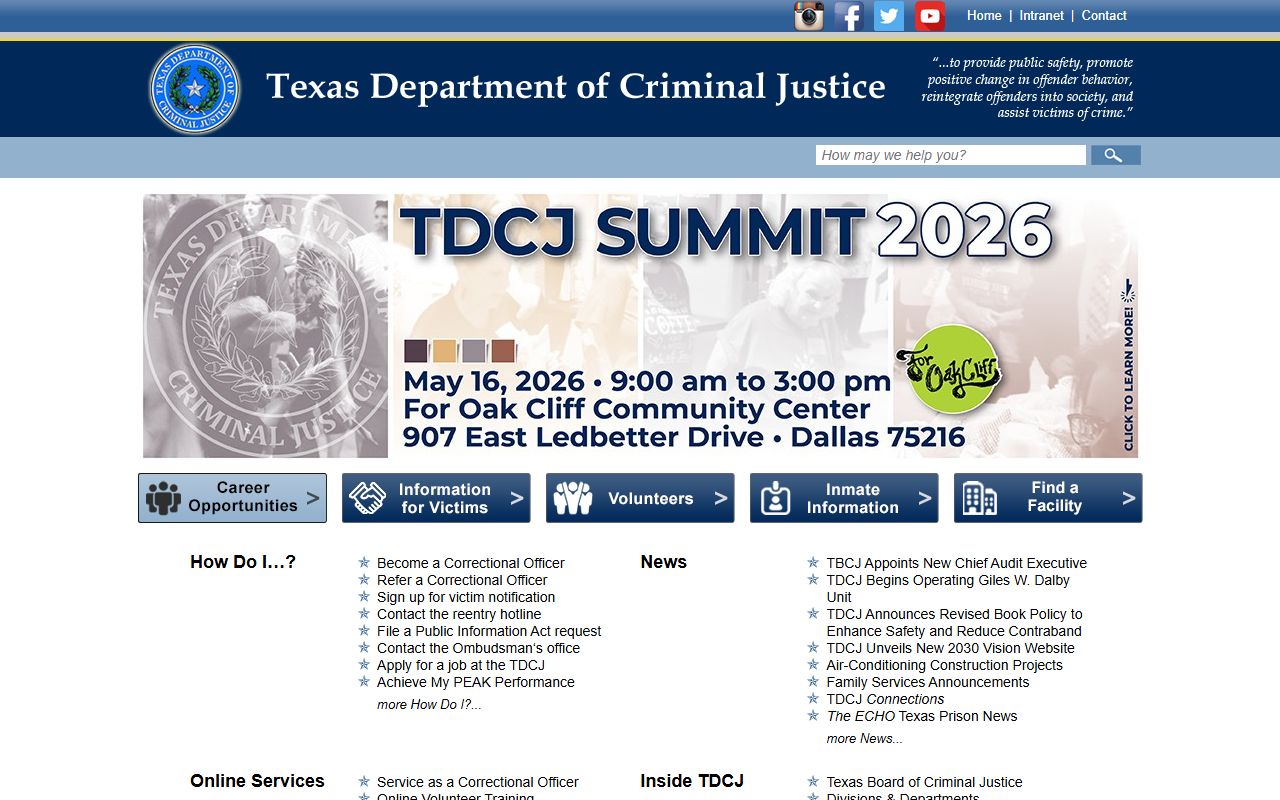
The TDCJ offender search lets you look up current and former state inmates and view offense details, sentence length, and projected release dates.
Juvenile Records in Texas
Records for juveniles in the Texas state system go through the Texas Juvenile Justice Department (TJJD). The TJJD at tjjd.texas.gov oversees youth committed to state facilities and provides information on the juvenile justice system in Texas. Records for juveniles committed to TJJD are not public. State and federal law restrict access to juvenile criminal records, and they are treated differently from adult criminal history. At the county level, juvenile case records are held by the District Clerk and are typically sealed from public view. County courts with juvenile jurisdiction handle these cases, and most proceedings are confidential under Texas Family Code provisions. For victims of juvenile offenders in the state system, TJJD's Victim Services program provides notifications and support at no cost.
The Texas Juvenile Justice Department website manages youth committed to state facilities and keeps records on the juvenile population in the state system.

Juvenile records held by TJJD are not public. Access is restricted under state and federal law to protect the privacy of youth in the justice system.
The TJJD Victim Services program provides crime victims with notification and support when the offender is in the juvenile state system.
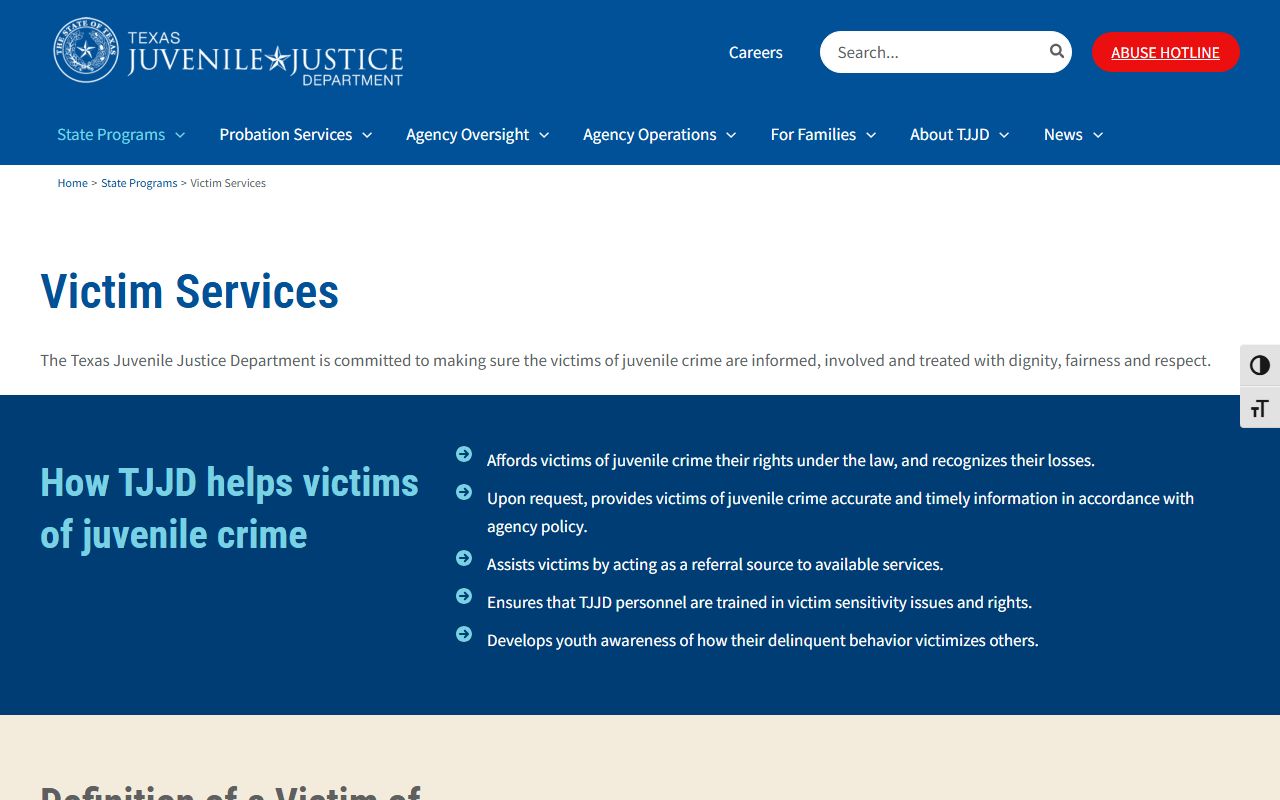
Victims can register with the program to receive updates on a youth offender's status, including release or placement changes during their time in the TJJD system.
Texas Public Information Act
The Texas Public Information Act, found in Texas Government Code Chapter 552, gives anyone the right to request records from any government agency in the state. You do not need to explain why you want them. An officer for public information may not ask your reason. All government information is presumed to be available to the public unless a specific legal exception applies. Section 552.221 requires governmental bodies to promptly produce public information when asked. Most agencies have 10 business days to release responsive records. You can submit requests by mail, email, hand delivery, or any method the agency approves. The law covers state agencies, county and city governments, courts, and any other governmental body in Texas.
The Texas Attorney General is the primary resource for public information questions and disputes. Their open government resources include a public information handbook, training materials, and an open records hotline at 512-478-6736 or toll-free 1-877-673-6839. Visit texasattorneygeneral.gov/open-government for the full handbook and guidance. The PIA training resources page has materials for both the public and government agencies. If an agency refuses a valid request or charges excessive fees, the AG's office handles complaints and can issue rulings.
The Texas Attorney General open government page is the central resource for using the Public Information Act to request records from Texas agencies.

The AG handles disputes when agencies deny record requests or when requestors believe the fees charged are too high under the law.
The PIA and OMA Training Resources page has the official Texas public information handbook and training materials from the Attorney General's office.
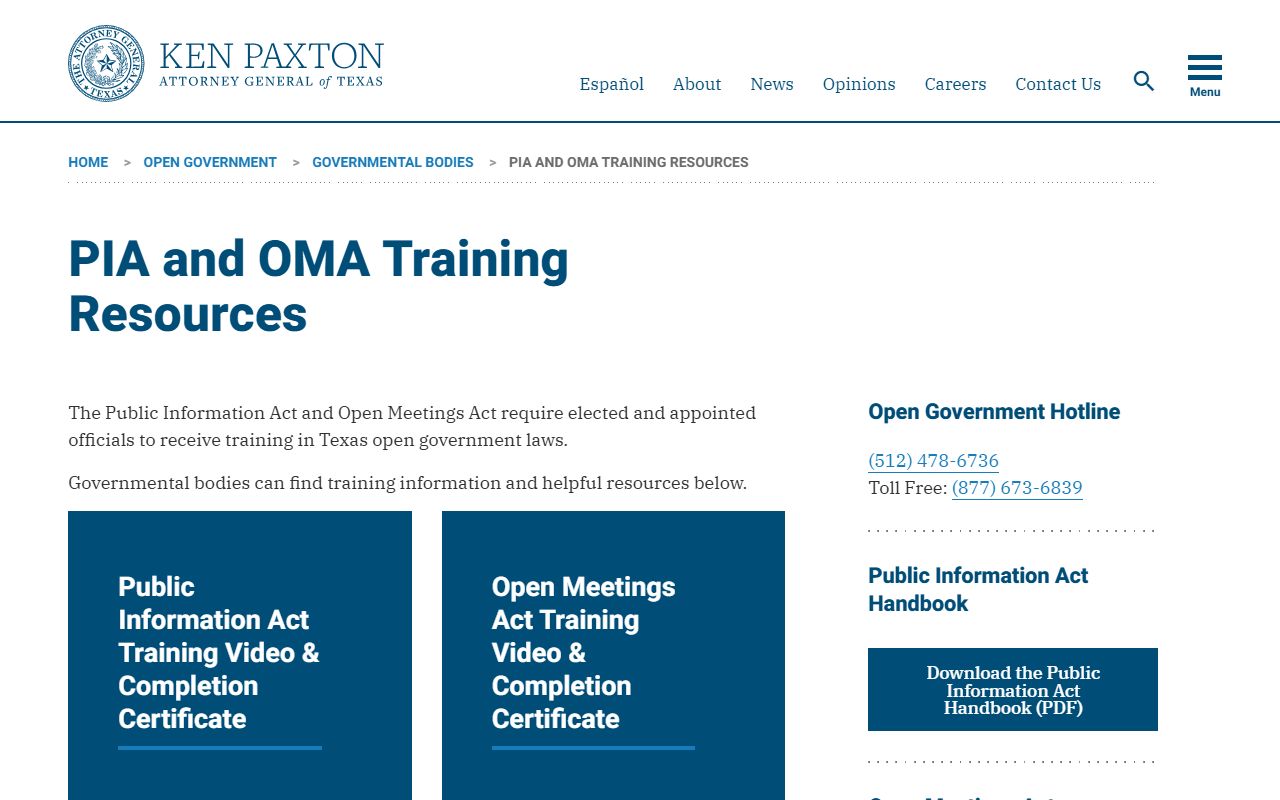
The handbook explains which records are public, which exceptions may apply, how to file a proper request, and how to challenge a denial.
Texas Background Check Laws
Several Texas statutes control who can access criminal history records and how they can be used. Texas Government Code Section 411.135 defines the public's right to access conviction and deferred adjudication information from the DPS system. It limits what the public portal shows to information that qualifies as criminal history record information maintained by the department. Texas Government Code Section 411.085 makes unauthorized obtaining, use, or disclosure of criminal history information a criminal offense. Section 411.082 sets out the scope and application of the full criminal history records subchapter. All three sections fall under Chapter 411 of the Government Code, which is the primary legal authority for how the DPS manages and releases criminal history data in Texas.
Texas Business and Commerce Code Section 20.05 places a seven-year limit on reporting most non-conviction records for lower-wage positions under $75,000 per year, though federal law controls conviction records without a time limit. The nondisclosure statute at Texas Government Code Section 411.0725 lets certain people petition a court to seal qualifying misdemeanor convictions after completing a set waiting period. If granted, the agency stops releasing that record to the public. The sex offender statutes in Texas Code of Criminal Procedure Chapter 62 cover registration requirements, public access rules, and conditions for removal from the registry. Texas Government Code Section 552.023 gives individuals the right to access their own criminal history information held by the DPS.
Texas statutes covering background checks and criminal history are available at statutes.capitol.texas.gov, where you can search by code name, chapter, or keyword.
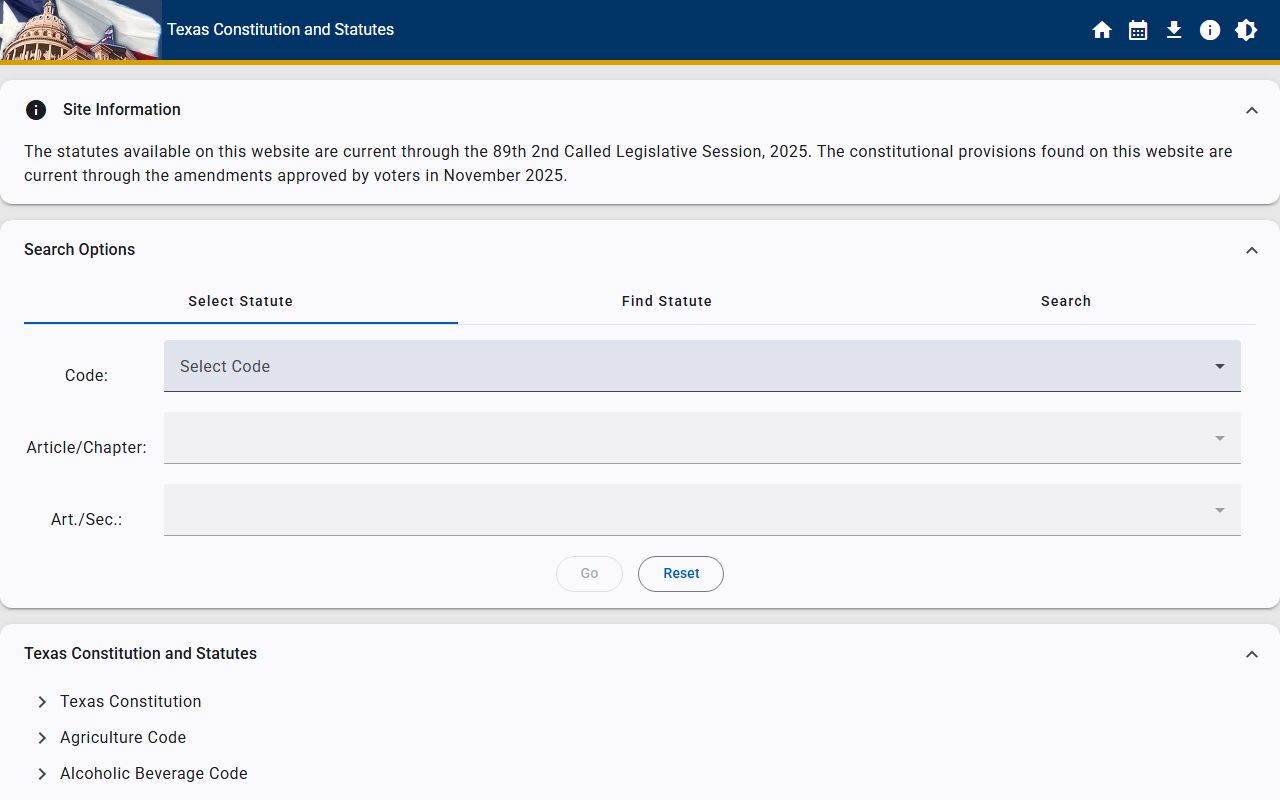
Key chapters include Government Code Chapter 411 for criminal history records and Chapter 552 for the Public Information Act, both of which govern access to background check data in Texas.
Texas Driver Records
Texas driver license holders can get their own driving record online through the DPS. Visit the DPS driver record portal to place your request. You can print the record right away or have it sent by email. The record shows traffic violations, crash involvement, and any actions taken against your license. You can only request your own driving record through this self-service portal. This is a separate system from the criminal history database. Driver records and criminal history are maintained by different divisions within the DPS and are not combined in a single background check search.
The Texas DPS driver record portal lets license holders request their own driving history for immediate printing or email delivery.
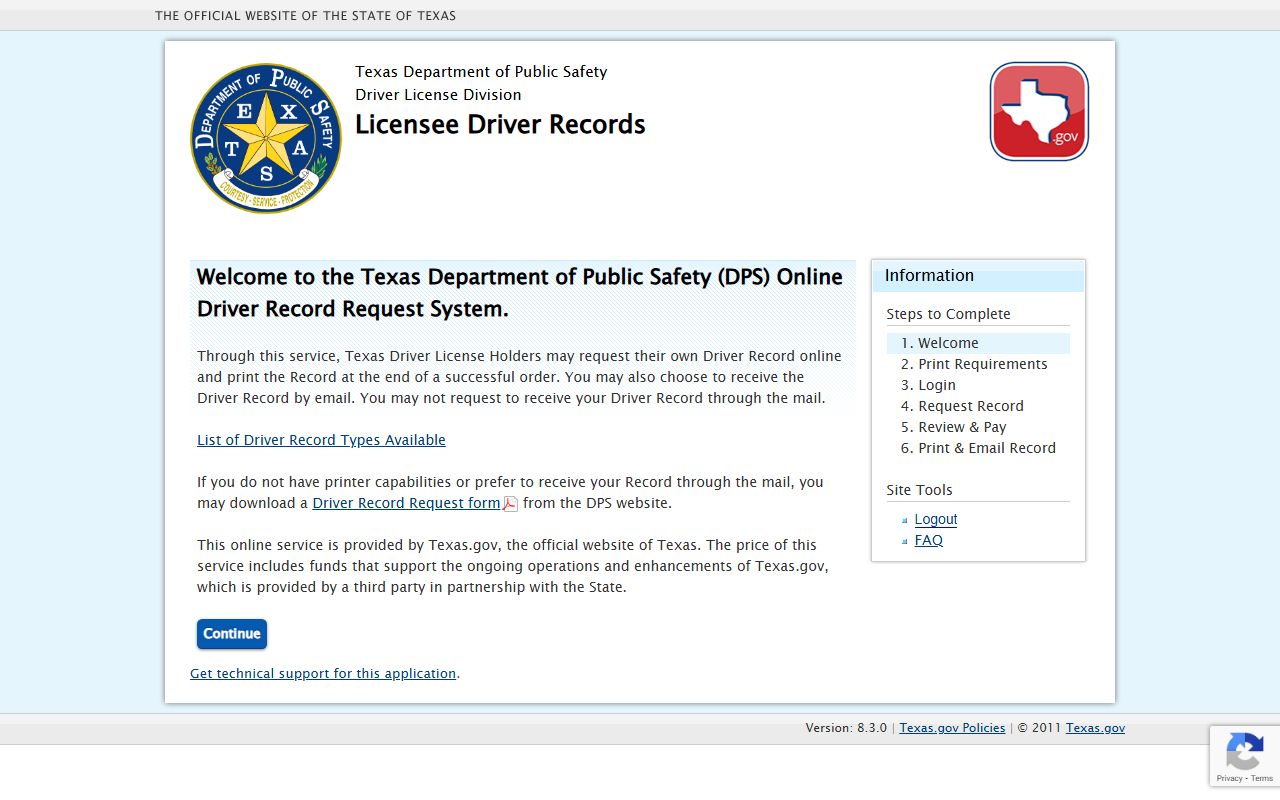
The driver record includes your violation history, crash reports, and license status. Mail requests for driver records are not available through this portal.
Note: Driver records and criminal history are separate systems at the DPS. You cannot obtain another person's driving record through the self-service online portal.
Browse Texas Background Check Records by County
Each of Texas's 254 counties has its own County Clerk and District Clerk that handle local records. County Clerks keep misdemeanor criminal cases and civil records. District Clerks hold felony criminal records and family law filings. Select a county below to find contact info, local resources, and how to search background check records in that area.
Texas Background Check Records by City
Major Texas cities have their own police departments and municipal courts that hold certain types of public records. City resources vary. Select a city below to find background check resources specific to that area, including local law enforcement contacts and how records are accessed.